
We’ve been thinking about our time at Forrester’s B2B Summit 2026 since we got back from Phoenix. And while it was no surprise to see so much AI-fed disruption and uncertainty on the event menu, B2B leaders are hungry for ways to help teams cut through the noise and move forward with confidence.
Fortunately, we also saw enough in the insight-rich buffet of presentations and conversations to view the next 12 months with cautious optimism. So let’s take a closer look at the trends and talking points that shaped this year’s B2B Summit—starting with three actionable learnings.
________________________________________________________________________________________________
Here are our three big takeaways from Forrester’s B2B Summit 2026—and what each of these trends could mean for the near- and long-term future of B2B marketing teams:
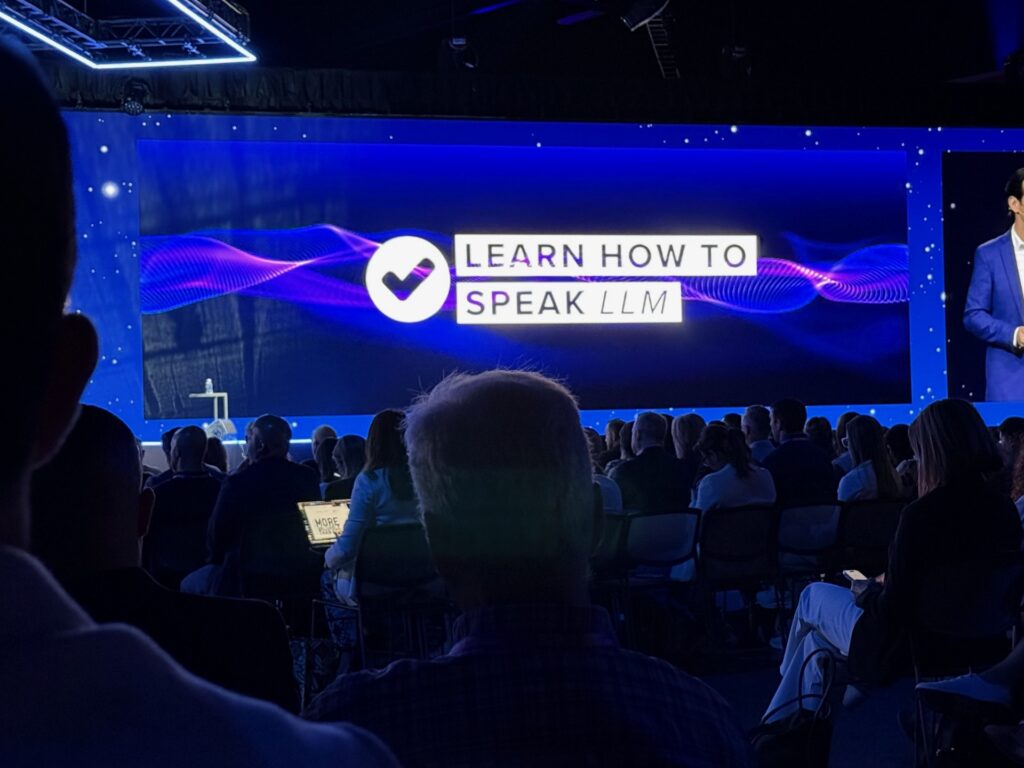
1. Visibility into the buyer journey is disappearing.
Our understanding of how buyers make decisions is declining rapidly.
More buyers are doing more research independently, often through AI tools like ChatGPT and Claude, and channels we can’t track in the same way (and with the same level of accuracy) as before. Where SEO ranked search-optimized sites, answer engine optimization (AEO) is about showing up in the AI-generated overviews buyers now rely on to research, compare, and shortlist solutions.
Forrester’s “visibility vacuum” and the rise of AEO is fueling urgent questions about how brands should engage buyers—and measure the impact of their interactions.
Your next step.
Enterprise teams must emphasize consistency across channels and ensure they’re showing up in relevant contexts, not just optimizing what’s measurable. Visibility is the new KPI—not traffic, not clicks, but how your brand appears in the buyer’s self-led, AI-powered research journey.
See the full story on visibility in B2B IQ CEO Liam Blackwell’s day one dispatch from B2B Summit 2026.
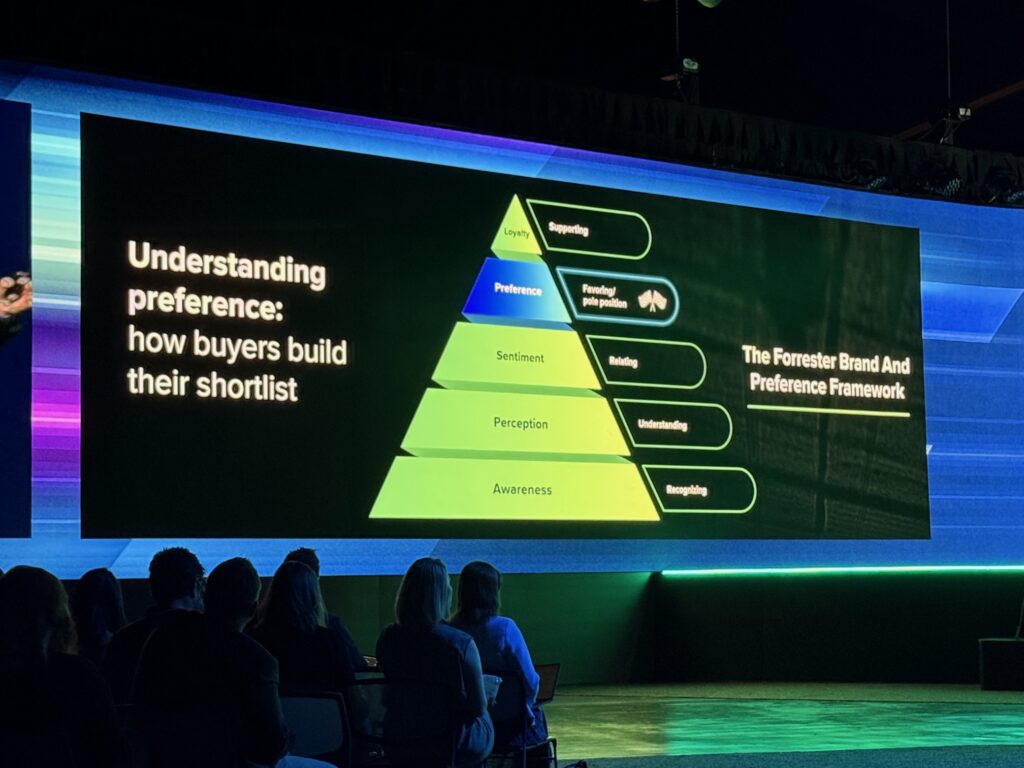
2. Preference is shaped before the process begins.
“68% of B2B buyers have a preferred vendor at the start of the formal buying process. 80% of these B2B buyers select this preferred vendor.”¹
Forrester’s attention-grabbing figures help to tell the story of “preference marketing”—where brands are shortlisted before buyers are actively in-market.
And the moral of this story is clear: brand and demand teams can’t afford to wait for buyers to engage.
Your next step.
By the time a buyer begins their research, the shortlist is already written. So enterprises can’t rely on siloed brand awareness and demand capture tactics. They must shift from chasing individual leads to engaging buying groups, and from capturing interest in a moment to reinforcing their brand consistently over time. To do this, brand and demand must coordinate across content, programmatic, and social environments to drive engagement early and often.
¹ Source: Forrester’s Buyers’ Journey Survey, 2025.
________________________________________________________________________________________________
3. Strategy is evolving faster than execution.
In every new challenge, B2B leaders and thinkers see potential solutions.
True to form, we saw strong alignment around strategic approaches like connected GTM, the need to engage buying groups (rather than just individuals), and cross-functional brand and demand collaboration.
But the execution is still fragmented. And the exact means of measurement remains somewhat unclear.
Your next step.
The opportunity is less about adopting new frameworks and more about making execution more connected. Enterprise teams that can align activity across channels and functions will begin to create a clear advantage—and be better prepared to incorporate new methodologies and measurements as they evolve.
As a bonus, here’s one more takeaway we’re as eager to share as we are to put into practice here at B2B IQ: take the time to map your position in the market (and at different stages of the buying process) based on input from existing customers.
This simple exercise will enable your brand to ground its strategy in how buyers actually see you, not just how you position your business.
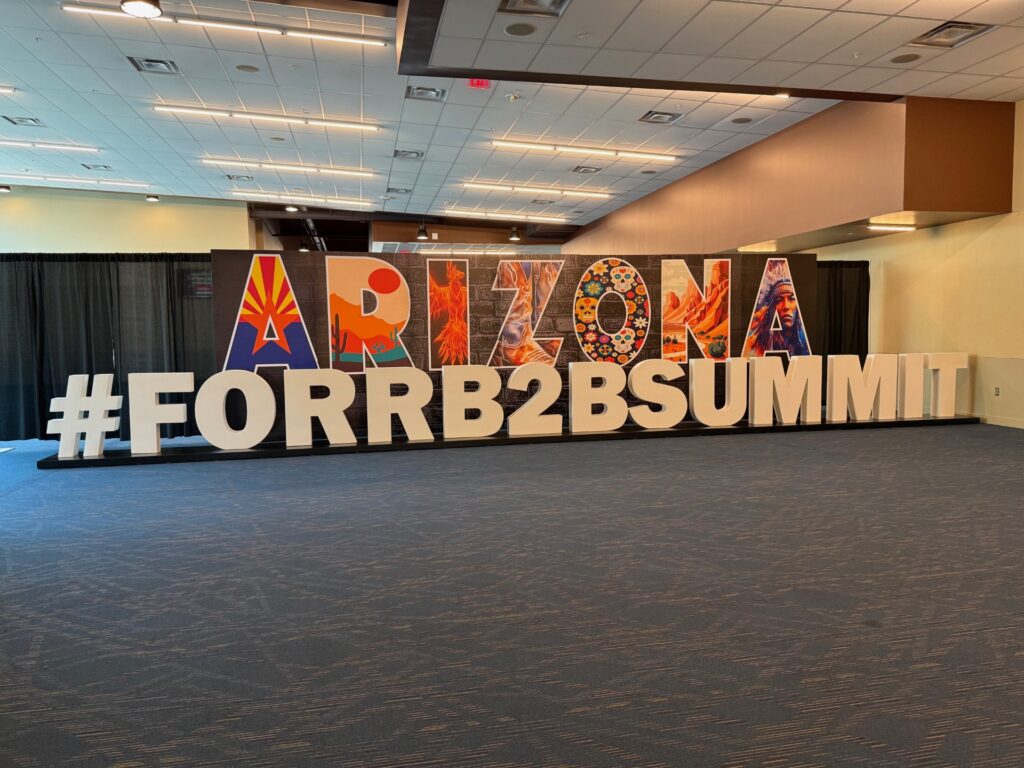
Hearing from our peers.
On the subject of comparison, it was interesting to note how our own impressions aligned with the conversations being had by the Summit’s other attendees.
For all of us, visibility was the dominant theme from the start.
Attendees wanted to explore how much of the buying process now happens outside of traditional, trackable channels—and what that will mean for marketing.
Not an easy question to answer. But one we were determined to dig into further with attendees—and visitors to our stand. So we asked:
What’s one thing your marketing team is rethinking in 2026?
Here’s what B2B leaders had to say at Forrester’s B2B Summit 2026:
Visibility
“How to gain more visibility on AI platforms [and] get more qualified leads.”
“Increasing visibility to drive more buyers toward conversion.”
Alignment
“Bring brand close to demand.”
“Brand to demand always-on programs.”
Relevance
“How we reach our audiences and what exactly their needs are.”
“How to build a more personalized, customer-centric marketing experience.”
Every business charts its own unique set of challenges and objectives. But it was encouraging to see so much overlap in attendee responses, because a problem shared is a problem solved—especially in our solution-obsessed sector.
________________________________________________________________________________________________
Rethinking your approach, not reinventing.
Visibility, preference marketing, and execution lag are important trends, but they shouldn’t turn your world upside-down overnight.
Buyer research and engagement is becoming less visible, and there’s a growing expectation that marketing should create influence and build preference earlier. But that doesn’t mean a complete rethink of strategy or structure.
Right now, the challenge for most teams is simply to adapt how they design content delivery, and measure and evaluate performance. The brands that pull ahead over the next 12 months won’t be the ones that rethink everything. They’ll be the ones that show up earlier, more consistently, and in the right places.
Let’s move beyond standalone content programs, develop more integrated cross-channel engagement activities, and reconnect your brand with the modern buying journey.